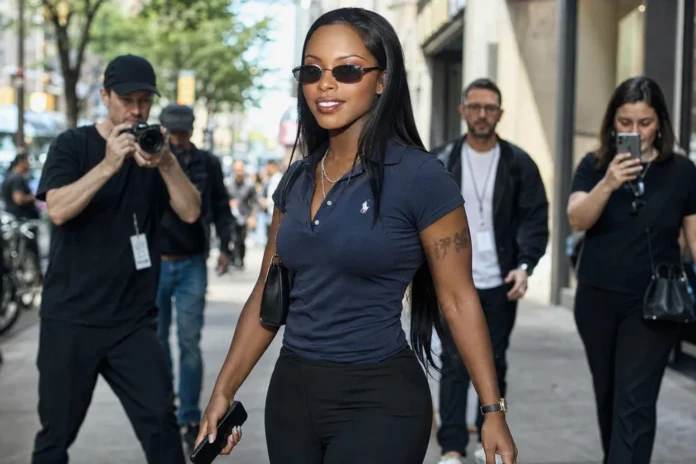
Few names carry as much weight in 1990s hip-hop as Foxy Brown. From a teenage prodigy in Brooklyn to one of the most influential female rappers of all time, her career is a story of raw talent, controversy, and reinvention that still shapes conversations about women in rap today.
Foxy Brown Biography Table
| Field | Details |
|---|---|
| Full Name | Inga DeCarlo Fung Marchand |
| Stage Name | Foxy Brown |
| Place of Birth | Brooklyn, New York |
| Nationality | American |
| Ethnicity | Trinidadian-American (Chinese-Trinidadian, Indo-Trinidadian, and Afro-Trinidadian heritage, with part Filipino ancestry) |
| Profession/Occupation | Rapper |
| Years Active | 1994–present |
| Education | Brooklyn College Academy |
| Genre/Field | Hip-hop, R&B-tinged hip-hop |
| Children | One daughter |
| Parents | Judith Marchand (mother, elementary schoolteacher) |
| Siblings | Two older brothers |
| Notable Works | Ill Na Na, The Firm: The Album, Chyna Doll, Broken Silence, Brooklyn’s Don Diva |
| Awards/Honors | Grammy nomination for Best Female Rap Solo Performance |
Foxy Brown Movie: Is She Connected to the Pam Grier Film?
Many searches for “Foxy Brown movie” or “Foxy Brown (film)” actually point to a completely different piece of pop culture: the 1974 blaxploitation film starring Pam Grier. That movie predates the rapper by two decades and has no direct connection to Inga Marchand’s career.
What links the two is influence, not history. Foxy Brown the rapper took her stage name directly from the film character, drawn to the self-assurance and brash style Pam Grier brought to the screen. It was a deliberate homage from a teenager building a persona for a male-dominated industry.
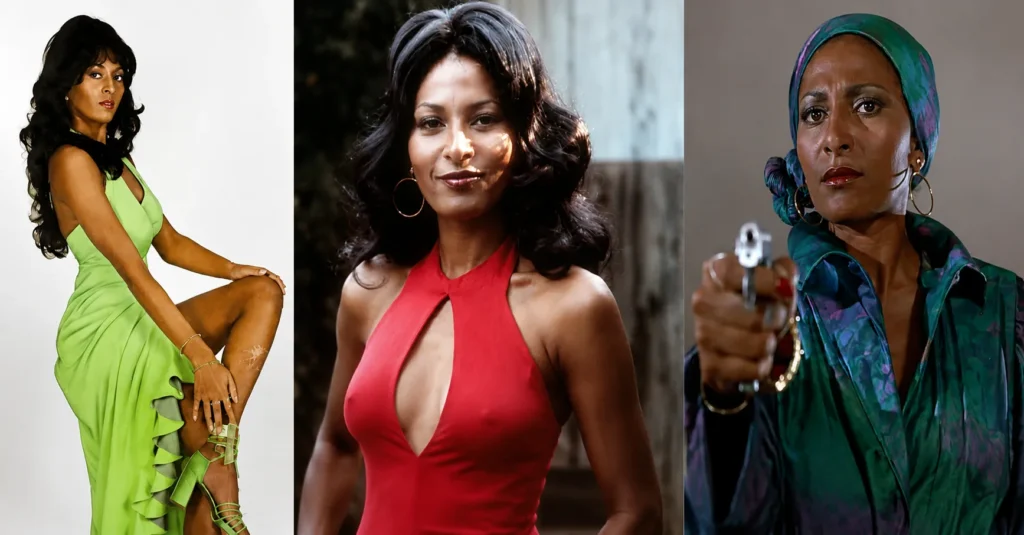
That borrowed name became inseparable from her own image. The confidence, the provocative image, and the commanding flow associated with the film character carried directly into how the rapper presented herself on record and in interviews throughout her career.
So while “Pam Grier Foxy Brown” and “Foxy Brown rapper” often show up in the same searches, they describe two different eras and two different women. One is a 1970s film icon; the other is a Brooklyn-born MC who borrowed her name and made it her own.
Early Life and Family Background
Inga Marchand grew up in Park Slope, Brooklyn, in a middle-class, close-knit family. Her mother, Judith Marchand, worked as an elementary schoolteacher and raised Inga alongside two older brothers after her parents divorced, becoming a single mother who instilled strong family values.
Her mixed descent — Chinese-Trinidadian, Indo-Trinidadian, and Afro-Trinidadian, with part Filipino roots — shaped a household rich in Trinidadian traditions. Music was a constant presence, and by four years old she was already talking constantly about rhymes and freestyle.
She attended Brooklyn College Academy, where teachers recognized her as a bright student despite her growing reputation for rhyming in the school lunchroom. Her natural gift for freestyle set her apart in city rap competitions well before she signed a record deal.
By her early teens, hip-hop had become more than a hobby. She was performing in local talent shows around Brooklyn, sharpening a delivery that would later be compared to genre veterans like Queen Latifah and Heavy D, both of whom she cited as early inspirations.
Discovery: From Brooklyn Talent Shows to Def Jam
Foxy Brown’s break came through a freestyle invitation that turned into industry buzz almost overnight. At just 15 years old, her talent at a Brooklyn talent contest caught attention, and by 1994 she was already appearing on records as the lone female guest among established male rappers.
Her guest verse on the “I Shot Ya” remix alongside LL Cool J introduced her to a national audience. Around the same period, she appeared on Nas’s testosterone-heavy “Ain’t No Nigga,” a single that went on to earn RIAA platinum certification and helped cement her presence in the genre.
These guest spots sparked a label bidding war. Def Jam ultimately won out, signing her in early 1996 at age 17. Other gold singles and remix appearances — including cuts for Toni Braxton, Total, and the Nutty Professor soundtrack — kept her name circulating before her debut album even arrived.
By March 1996, the teenager who had been rhyming in a Brooklyn lunchroom was a signed Def Jam artist with a growing catalog of high-profile guest spots. Few new artists entered the industry with that level of built-in credibility.
Debut Album: Ill Na Na (1996)
Released in 1996, Ill Na Na debuted at No. 7 on the Billboard 200, selling roughly 128,000 copies in its first week — a striking number for a 16-year-old debut artist. The album eventually went platinum, moving well over a million copies.
The record leaned on Trackmasters production and guest appearances from Jay-Z, Method Man, and Blackstreet, whose hook powered the lead single “I’ll Be.” Critics like Evelyn McDonnell at the Village Voice and Rolling Stone praised her expert rhyme skills while questioning the abundantly sexual lyrics for someone so young.
That tension — a powerful voice paired with a provocative image many called inappropriate for her age — defined the album’s reception. It didn’t slow sales. Ill Na Na became one of the defining releases in the wave of sexually confident female rappers reshaping hip-hop in the mid-90s.
By her 17th birthday, Foxy Brown had already achieved what most artists spend a career chasing: a platinum debut, a Billboard top-ten single, and a permanent seat among the era’s key female voices.
The Firm (1997)
In 1997, Foxy Brown joined Nas, AZ, and Nature to form The Firm, a supergroup built around Trackmasters production and Steve Stoute’s direction. Their self-titled album, The Firm: The Album, debuted at No. 1 on the Billboard 200 with around 200,000 copies sold in its first week.
Despite the commercial debut, the album was critically panned and produced no hit single. Personal differences within the group — including friction involving Cormega and Nature — led to internal disputes, and the group ultimately split not long after the November 1997 release.
Guest appearances from Dr. Dre and Canibus couldn’t offset the mixed critical reception. Many reviewers viewed The Firm as a missed opportunity: a roster of talented NYC-based MCs whose chemistry never fully translated into cohesive material.
For Foxy Brown, The Firm was a brief detour rather than a defining chapter. It added another platinum-adjacent credit to her resume but didn’t shift the trajectory she’d already set with Ill Na Na.
Chyna Doll (1999)
Chyna Doll arrived in January 1999 and made history immediately — Foxy Brown became the first female rapper to debut a solo album at No. 1 on the Billboard 200, moving nearly 173,000 to 180,000 copies in its opening week and eventually going platinum.
The rollout leaned heavily into image, including a controversial Vibe magazine cover shoot and glossy promotional material that stirred debate among retailers and readers alike. Jay-Z produced three tracks on the record, reinforcing their long-running creative partnership.
Sales fell off hard after the strong debut, a pattern that became a talking point in coverage of the album. Still, the achievement of topping the Billboard 200 as a solo female act placed her alongside Lil’ Kim and Lauryn Hill in a small circle of dominant women in rap.
The album’s autobiographical touches, paired with her established bad-girl reputation, kept her in headlines throughout 1999 — for the music as much as for the persona surrounding it.
Broken Silence (2001)
Released July 17, 2001, Broken Silence debuted at No. 5 on the Billboard 200 and went gold within 35 days, eventually approaching half a million copies sold. The album leaned into her Trinidadian heritage with dancehall and Caribbean patois influences throughout.
Lead single “Oh Yeah,” featuring Spragga Benz, sampled Toots & the Maytals and became a radio hit, showcasing a poppier, New Wave-tinged production style courtesy of The Neptunes. “Na Na Be Like,” featuring Kelis, added another layer to the record’s genre-blending approach.
The album arrived after a year-long delay, a preview of the release troubles that would follow her for the rest of the decade. Even so, Broken Silence is often viewed as one of her most stylistically distinct records, blending icy flow with dancehall swagger.
Its Top Five debut and gold certification confirmed that, four years after “I Shot Ya,” she could still command commercial attention on her own terms.
Unreleased Albums and Industry Setbacks
The years following Broken Silence were marked by delays and cancellations rather than new music. Ill Na Na 2: The Fever and Black Roses were both recorded and repeatedly pushed back, caught up in contract disputes with Def Jam and shifting label politics under Lyor Cohen.
A sudden hearing loss became public knowledge during this period, including an appearance on the Wendy Williams show, and reportedly complicated her ability to record and perform consistently. Around the same time, illegally traded masters and leaks further disrupted planned release schedules.
She briefly left Def Jam before renewing her deal, working alongside Kanye West, Missy Elliott, and Timbaland on shelved material. Despite the star power involved, creative-control disputes and reduced output meant most of this work never reached an official release.
By the mid-2000s, she had shifted focus outside music entirely, including exploring fur fashion design under her Ill Na Na Entertainment imprint, a sign of how uncertain her recording future had become.
Brooklyn’s Don Diva (2008) and Later Career
Brooklyn’s Don Diva arrived in May 2008 through Koch, debuting at No. 8 on Top R&B/Hip-Hop Albums and No. 83 on the Billboard 200 — modest numbers compared to her earlier releases but notable given the years of delay preceding it.
The street album compiled previously unreleased tracks alongside newer material, arriving amid heavy media attention tied to a prison sentence she was facing around the same period. A brief stint connected to Roc-A-Fella circles added to the record’s backstory.
Commercially, it peaked lower than her 1990s work, reflecting both a changed rap landscape and her reduced presence in the years leading up to it. Still, for longtime fans, the album offered a long-awaited return after nearly a decade of shelved projects.
Since 2008, new full-length releases have been rare, with her more recent activity centered on guest features, reunions with Jay-Z, and occasional performances rather than a steady album cycle.
Legal Issues and Public Controversies
Foxy Brown’s career has been shadowed by a string of legal troubles. A 2004 fight involving two manicurists led to assault charges, probation violations, and eventually a year in jail after she was found in criminal contempt for violating the terms of her release.
Additional incidents — including a 2007 altercation and menacing charges — kept her in and out of court through the late 2000s. She publicly vowed to clean up her image following a stretch that included solitary confinement, though the underdressed image and vulgarity criticisms from earlier in her career continued to follow her.
Not all controversy involved legal charges. Her public disparagement of Jay-Z and a rumored feud with Lil’ Kim generated backlash and media attention throughout the early 2000s, feeding into her broader bad-girl reputation.
By the 2010s, coverage shifted toward her attempts to rebuild her public image, distancing herself from the more publicized incidents of the previous decade while continuing to defend her artistic legacy.
Personal Life
Foxy Brown gave birth to her first child, a daughter, in January 2017, a moment she later described publicly as one of the most significant of her life. She had previously disclosed a sudden hearing loss that affected her both personally and professionally.
She was previously linked romantically to rapper Kurupt in the late 1990s and later to dancehall artist Spragga Benz, relationships that occasionally drew as much media coverage as her music. Her mother, Judith Marchand, remained a steady presence throughout, reportedly devastated by some of the legal troubles her daughter faced.
Beyond relationships, she has spoken about health struggles during periods away from the spotlight, part of what fans and journalists have pointed to as reasons behind gaps in her release schedule.
Foxy Brown Net Worth
Foxy Brown’s net worth reflects a career built on platinum album sales, guest features, and brand ventures rather than a single steady income stream. Multiple platinum and gold certifications across Ill Na Na, Chyna Doll, and Broken Silence formed the financial backbone of her early career.
Beyond music royalties, she has pursued business ventures including her Ill Na Na Entertainment imprint and a fur fashion design line launched during a period of reduced recording output in the mid-2000s.
Legal issues and years of delayed or shelved albums in the 2000s likely affected her earning consistency, since new music releases typically drive both royalties and touring income for recording artists.
Despite the gaps, her back catalog — including hit singles and guest verses on records by Jay-Z, Nas, and Blackstreet — continues to generate streaming and licensing revenue, keeping her name commercially relevant decades after her debut.
Best Foxy Brown Songs
- “I’ll Be” (feat. Jay-Z) — The Blackstreet-interpolating lead single from Ill Na Na, and the song most credited with establishing her as a solo star in 1996.
- “I Shot Ya” (Remix) — Her breakout guest verse alongside LL Cool J, the appearance that first put her on the industry’s radar.
- “Get Me Home” (feat. Blackstreet) — A defining Ill Na Na cut that helped push the album toward platinum status.
- “Oh Yeah” (feat. Spragga Benz) — The Neptunes-produced, Toots & the Maytals-sampling lead single from Broken Silence.
- “Na Na Be Like” (feat. Kelis) — A standout from Broken Silence that leaned into Caribbean-influenced production.
- “Touch Me, Tease Me” (feat. Case) — A commercially successful single that showcased her R&B-tinged hip-hop side.
- “Ain’t No Nigga” (with Jay-Z) — Technically a Jay-Z single, but the guest verse that helped launch her career and sold millions of copies.
Style, Legacy, and Critical Reception
Foxy Brown is frequently cited among the most influential female rappers of all time, credited with helping pave the way for a generation of sexually confident female MCs. Her husky flow and commanding delivery set a template that later artists openly acknowledged as inspiration.
Comparisons to Lil’ Kim were constant during the late 1990s, with critics framing the two as rival forces reshaping how women were represented in a male-dominated genre. Both artists leaned into provocative imagery, but Foxy Brown’s Trinidadian-influenced flow and Brooklyn grit gave her a distinct identity.
Her direct influence shows up in how critics discuss modern artists — from Nicki Minaj to Megan Thee Stallion to City Girls — as part of a lineage tracing back to the raw, unapologetic style she brought to Ill Na Na. Writers at outlets like Spin have cited her as a pivotal record in that shift.
Despite her legal troubles and lengthy release gaps, her catalog remains a reference point in conversations about genre-shifting female rap artists, a legacy built on genuine skill as much as image.
Where Is Foxy Brown Now?
As of recent years, Foxy Brown remains active in the industry, though not through the album cycles that defined her 1990s and early 2000s peak. Her public appearances now center more on features, interviews, and reflections on her catalog than on new full-length projects.
She has continued to reunite professionally with longtime collaborator Jay-Z on occasion, a relationship that has spanned nearly her entire career despite past periods of public tension between the two.
Fans searching for updates on her status often find scattered social media activity and occasional guest verses rather than a formal comeback album, reflecting the same pattern of delayed and shelved projects that shaped much of her post-2001 career.
Even without a steady release schedule, her name continues to surface in retrospectives ranking the greatest female rappers of all time — a recognition of a catalog that, despite its gaps, remains foundational to the genre.
FAQs
Is Foxy Brown the rapper related to the Pam Grier movie?
No. The 1974 film Foxy Brown starring Pam Grier is a separate, unrelated work released two decades before the rapper’s debut. Foxy Brown the rapper took her stage name as a tribute to the film’s confident, iconic lead character.
What is Foxy Brown’s real name?
Her legal name is Inga DeCarlo Fung Marchand. She adopted the stage name Foxy Brown early in her career, inspired by the 1970s blaxploitation film character played by Pam Grier.
What was Foxy Brown’s best-selling album?
Ill Na Na (1996) is widely regarded as her most commercially successful and critically discussed album, going platinum and producing the hit single “I’ll Be” featuring Jay-Z.
Does Foxy Brown have children?
Yes, she gave birth to her first child, a daughter, in January 2017. She has spoken publicly about motherhood as a significant turning point in her personal life.
Why did Foxy Brown disappear from music for long stretches?
A combination of factors contributed to gaps in her career, including contract disputes with Def Jam, a sudden hearing loss, legal troubles, and multiple albums — including Ill Na Na 2: The Fever and Black Roses — that were recorded but ultimately shelved.
What is Foxy Brown’s net worth today?
Her net worth stems largely from her platinum-selling albums, guest features on major hits, and business ventures like her Ill Na Na Entertainment imprint, though extended gaps between releases in the 2000s likely affected her overall earnings compared to peak years.
Is Foxy Brown still making music?
She remains occasionally active with features and collaborations, including projects with longtime collaborator Jay-Z, but has not released a full studio album on the scale of her earlier work in recent years.
Read About : hulk hogan news