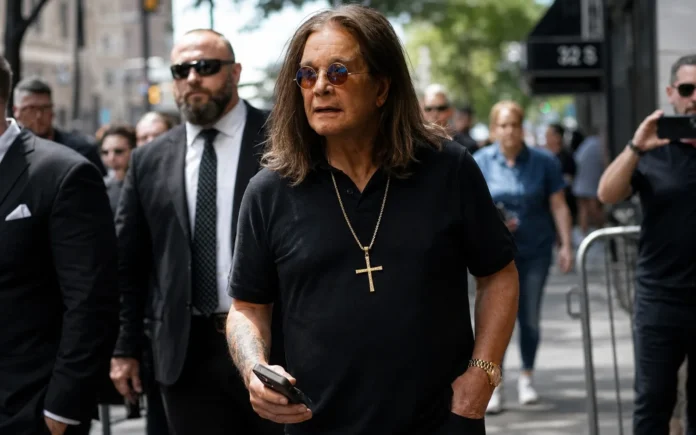
Ozzy Osbourne, the legendary Black Sabbath frontman and solo heavy-metal icon, died on July 22, 2025, at the age of 76. His family confirmed his death, ending decades of speculation surrounding the health of one of rock music’s most recognizable figures. Osbourne died just 17 days after performing at his emotional farewell concert in Birmingham, England.
The answer to the question “did Ozzy Osbourne die?” is therefore yes. His death was confirmed by his family and subsequently reported by major music and news organizations. His passing came after years of serious health difficulties, but his musical legacy spans more than five decades and includes Black Sabbath, a highly successful solo career, Grammy Awards, Rock & Roll Hall of Fame inductions, and the influential reality series The Osbournes.
Who Is Ozzy Osbourne? A Short Biography
| Detail | Information |
|---|---|
| Full Name | John Michael Osbourne |
| Date of Birth | December 3, 1948 |
| Age at Death | 76 |
| Birthplace | Birmingham, England |
| Nationality | British |
| Profession | Singer, songwriter, television personality |
| Years Active | 1960s–2025 |
| Famous For | Black Sabbath and solo heavy-metal career |
| Father | Jack Osbourne |
| Mother | Lillian Osbourne |
| Spouse | Sharon Osbourne |
| Children | Six |
| Net Worth | Widely reported by celebrity-finance sources, but not independently verified here |
Osbourne was born John Michael Osbourne in Birmingham on December 3, 1948. He became internationally famous as the lead singer of Black Sabbath, the Birmingham band widely regarded as one of the foundational forces behind heavy metal. His distinctive voice, theatrical image, and dark musical style eventually earned him the nickname “Prince of Darkness.”
His career extended far beyond Black Sabbath. After leaving the group, Osbourne built a successful solo career and later became a television personality through MTV’s The Osbournes. By the end of his life, he had become one of the most recognizable figures in rock music. The Recording Academy lists him as a five-time Grammy winner with 12 nominations.
Did Ozzy Osbourne Die? What Happened?
Ozzy Osbourne Died on July 22, 2025
Yes. Ozzy Osbourne died on July 22, 2025, aged 76. His family announced that he had died that morning while surrounded by his family. The announcement followed his final public performance only a little over two weeks earlier.
The timing made his death particularly poignant. On July 5, 2025, Osbourne appeared at Villa Park in Birmingham for Back to the Beginning, a massive celebration of Black Sabbath and his career. He performed from a throne because of his declining physical condition, but he was still able to sing some of his best-known songs before joining Black Sabbath’s original members for the band’s final performance.
What Was Ozzy Osbourne’s Cause of Death?
The official cause of death reported from his death certificate was out-of-hospital cardiac arrest, with acute myocardial infarction and coronary artery disease listed alongside Parkinson’s disease with autonomic dysfunction among the joint causes. He died at 76.
This distinction matters because Osbourne had experienced significant health problems for years. His health challenges included Parkinson’s disease, serious injuries, surgeries, and mobility difficulties. His final concert demonstrated how severely those problems had affected him physically, although he was still determined to perform for his fans.
Did Parkinson’s Disease Cause His Death?
Parkinson’s disease was included among the joint causes reported on Osbourne’s death certificate, but it would be inaccurate to describe his death simply as “Parkinson’s disease.” The reported certificate listed several contributing conditions, including cardiac arrest, acute myocardial infarction, coronary artery disease, and Parkinson’s disease with autonomic dysfunction.
Osbourne publicly revealed his Parkinson’s diagnosis in 2020. His condition became increasingly visible in his later years, particularly when injuries and other health problems made walking and performing difficult. Nevertheless, he continued recording music and ultimately returned to the stage for his final farewell performance.
Ozzy Osbourne’s Final Performance
Back to the Beginning in Birmingham
Ozzy Osbourne’s last performance took place at Villa Park in Birmingham on July 5, 2025, during Back to the Beginning. The event was designed as a farewell to Black Sabbath and a celebration of the band’s enormous influence on heavy metal. It brought together major rock and metal acts while placing Osbourne and the original Black Sabbath lineup at the center of the event.
For Osbourne, performing in Birmingham had particular significance because the city was where he was born and where Black Sabbath began. The concert therefore became more than a conventional farewell show. In hindsight, it was his final public musical statement, taking place just 17 days before his death.
His Final Black Sabbath Appearance
During the concert, Osbourne performed solo material before reuniting with Tony Iommi, Geezer Butler, and Bill Ward for a final Black Sabbath set. The group performed songs including “War Pigs,” “N.I.B.,” “Iron Man,” and “Paranoid.”
The significance of the performance became even greater after his death. Fans had gathered to witness what was already billed as a historic farewell, but the show subsequently became the final live appearance of one of heavy metal’s defining vocalists. The concert gave Osbourne the opportunity to close his performing career in the city where his musical journey had begun.
Ozzy Osbourne’s Legacy in Heavy Metal
Black Sabbath Changed Rock Music
Ozzy Osbourne’s importance to music begins with Black Sabbath. Formed in Birmingham in the late 1960s, the group developed a heavier, darker sound that became foundational to heavy metal. Osbourne’s vocals were a defining component of the band’s early identity, while Tony Iommi’s guitar work, Geezer Butler’s bass playing, and Bill Ward’s drumming completed the original lineup.
Albums such as Black Sabbath, Paranoid, Master of Reality, Vol. 4, and Sabbath Bloody Sabbath established the band’s enduring reputation. Osbourne eventually left Black Sabbath in 1979, but the band’s influence continued for decades. The original lineup later reunited, and Osbourne remained closely associated with the group throughout the remainder of his career.
A Successful Solo Career
Following his departure from Black Sabbath, Osbourne established himself as a major solo artist. His solo catalog produced songs that became staples of hard rock and heavy metal, including “Crazy Train,” while albums such as Blizzard of Ozz and Diary of a Madman helped establish his second act as a major musical force.
His later work demonstrated that his career was far from limited to his early Black Sabbath years. His 2020 album Ordinary Man reached No. 3 on both the U.S. Billboard 200 and U.K. album charts, while Patient Number 9, released in 2022, became his final studio album. The latter earned four Grammy nominations and produced two Grammy wins for Osbourne.
Awards, Hall of Fame Recognition and Cultural Impact
Osbourne’s achievements extended across multiple decades. According to the Recording Academy, he won five Grammy Awards from 12 nominations. His Grammy recognition included awards connected to both his solo work and Black Sabbath.
Black Sabbath was inducted into the Rock & Roll Hall of Fame in 2006. Osbourne was later recognized again for his solo career, making his relationship with the institution unusually significant. His influence also crossed into television through The Osbournes, which introduced his family life and personality to a much broader audience.
Ozzy Osbourne’s Final Years
Health Problems and Retirement From Touring
Osbourne’s later years were marked by substantial health challenges. In 2019, he suffered a serious fall and a neck injury, followed by multiple surgeries. He also dealt with Parkinson’s disease and other physical limitations that increasingly affected his ability to perform live.
Although health problems repeatedly disrupted his touring plans, Osbourne remained involved in music. He continued recording and releasing material, demonstrating that his creative career continued even when touring became increasingly difficult. His final album, Patient Number 9, arrived in 2022 and earned him two Grammy Awards.
His Final Farewell Came in Birmingham
The Back to the Beginning concert offered Osbourne a rare opportunity to end his performance career on his own terms. Despite needing to perform while seated, he appeared before thousands of fans and shared the stage with the musicians who had helped define his career.
His death just over two weeks later transformed the meaning of that performance. What was intended as a farewell became a genuine final bow. For many fans, the image of Osbourne performing from his throne in Birmingham now represents the closing scene of a career that began in the same city more than half a century earlier.
What Happened After Ozzy Osbourne’s Death?
Tributes From the Music World
News of Osbourne’s death generated tributes from musicians and fans worldwide. The Recording Academy described him as an artist who redefined heavy metal and influenced generations of musicians. His death was mourned not simply as the loss of a famous singer but as the passing of one of the central figures in the development of heavy metal.
The response was also strongly connected to Birmingham, the city that shaped Osbourne’s identity and Black Sabbath’s origins. Fans gathered at significant locations associated with the band and Osbourne, leaving flowers and other tributes following the announcement of his death.
His Funeral in Birmingham
Osbourne’s funeral took place in Birmingham on July 30, 2025. The private service followed a public outpouring of grief, with large numbers of fans lining the streets as his funeral procession moved through the city.
The location was fitting for an artist whose story was inseparable from Birmingham. Black Sabbath helped put the city’s name into the history of heavy metal, and Osbourne remained strongly connected to his hometown throughout his career.
Frequently Asked Questions About Ozzy Osbourne
Q: Did Ozzy Osbourne die?
A: Yes. Ozzy Osbourne died on July 22, 2025, at age 76. His family confirmed his death, saying he was surrounded by family. He had performed his final concert in Birmingham just 17 days earlier.
Q: How did Ozzy Osbourne die?
A: His death certificate reportedly listed out-of-hospital cardiac arrest, acute myocardial infarction, coronary artery disease, and Parkinson’s disease with autonomic dysfunction among the joint causes.
Q: When was Ozzy Osbourne’s last concert?
A: His final live performance was on July 5, 2025, at Villa Park in Birmingham during Back to the Beginning. He performed solo songs and then reunited with the original Black Sabbath lineup for the band’s final set.
Q: How old was Ozzy Osbourne when he died?
A: Ozzy Osbourne was 76 years old when he died on July 22, 2025. He was born on December 3, 1948, in Birmingham, England.
Q: What was Ozzy Osbourne famous for?
A: Osbourne was best known as the original lead vocalist of Black Sabbath and for his highly successful solo career. He was also widely recognized through The Osbournes television series and became one of heavy metal’s most influential cultural figures.
Conclusion
So, did Ozzy Osbourne die? Yes. The legendary singer died on July 22, 2025, at age 76, after decades of defining heavy metal through Black Sabbath and his solo career. His death followed years of serious health challenges, including Parkinson’s disease, and came only 17 days after his final performance at Birmingham’s Villa Park.
Yet Osbourne’s story is ultimately about more than his death. From Black Sabbath’s groundbreaking early records to his solo hits, Grammy-winning later work, television fame, and emotional final performance, he left an unusually broad cultural legacy. His music continues to provide the strongest answer to what remains after the “Prince of Darkness”: an enduring influence on rock and metal that is unlikely to disappear.
Read About : regina george