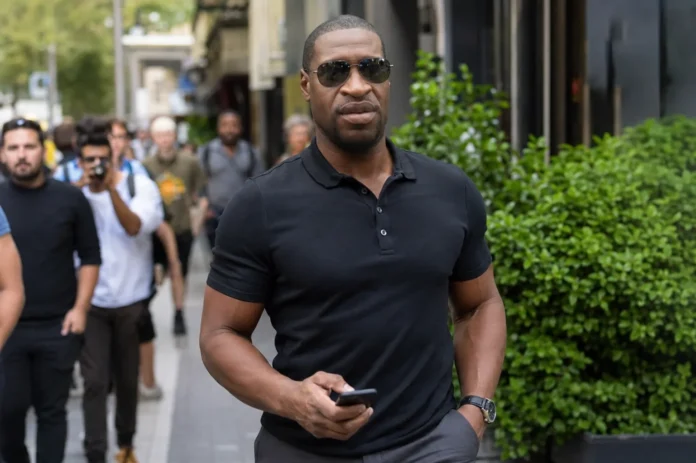
George Floyd’s death on May 25, 2020, in Minneapolis became one of the most defining events in modern U.S. history, sparking a global reckoning over policing, systemic racism, and racial injustice that reshaped conversations around law enforcement across the country.
Biography Table
| Field | Details |
|---|---|
| Full Name | George Perry Floyd Jr. |
| Date of Birth | October 14, 1973 |
| Place of Birth | Fayetteville, North Carolina |
| Date of Death | May 25, 2020 |
| Age | 46 |
| Nationality | American |
| Profession/Occupation | Truck driver, security guard, bouncer |
| Notable Works | Subject of “His Name Is George Floyd” (2022 biography) |
Who Is George Floyd?
George Floyd was born on October 14, 1973, in Fayetteville, North Carolina, and later moved to Minneapolis, where he worked as a truck driver and a security guard. Before his death, he was known to friends and coworkers simply as a father figure trying to rebuild his life.
His full story is documented in His Name Is George Floyd: One Man’s Life and the Struggle for Racial Justice, a 2022 biography co-authored by Robert Samuels and Toluse Olorunnipa. The book drew on hundreds of interviews, diary entries, and personal and medical records to reconstruct his life beyond the video that made him a household name. It went on to win the 2023 Pulitzer Prize for General Nonfiction.
Understanding who George Floyd was matters because much of the public conversation focused only on the final nine minutes of his life. The biography, written by two Washington Post reporters, aimed to restore the fuller picture of a man from Fayetteville who became, unwillingly, a reference point for a modern movement.
George Floyd’s Criminal Record
George Floyd had a documented criminal history in Texas before he moved to Minneapolis, including convictions in his younger years. This record was widely discussed in media coverage following his death, with some using it to question the public reaction, while others argued it had no bearing on whether excessive use of force was justified during his arrest.
By the time of the incident on May 25, 2020, Floyd had reportedly been working to turn his life around, taking on steady work and staying out of the criminal justice system. The attempted arrest that led to his death stemmed from a store employee’s report involving a counterfeit $20 bill, not any prior offense.
How Did George Floyd Die?
On May 25, 2020, police were called after a store employee alleged that Floyd had used a counterfeit $20 bill. During the attempted arrest, Minneapolis police officer Derek Chauvin knelt on Floyd’s neck while other officers helped restrain him, pinning him against a squad car and later the ground.
Floyd fell to the ground and was held down for nine minutes and 29 seconds, with Chauvin’s knee on his neck for the majority of that time. Bystanders pleaded with officers to let him breathe. Floyd was later pronounced dead, and two independent autopsies both ruled the death a homicide.
Where Did George Floyd Die?
The incident took place outside Cup Foods, a corner store in Minneapolis, Minnesota, at the intersection of 38th Street and Chicago Avenue. This location has since become a permanent memorial site, now widely known as George Floyd Square, where community members continue to gather.
Minneapolis itself became the epicenter of the story that followed, from the criminal trial of the officers involved to the nationwide protests that emerged in the days after the bystander video spread online.
The Bystander Video
The world learned about George Floyd’s death largely because of one person: Darnella Frazier, a teenage bystander who filmed the encounter on her mobile phone. Her footage became the primary visual record of the incident, since police body cameras alone would not have reached the public the same way.
Frazier uploaded the video, and it spread rapidly across the internet, reaching a global audience within hours. That rapid global spread is widely credited as the spark that turned a local police incident into an international movement demanding law-enforcement reform.
George Floyd Autopsy Findings
Two separate autopsies were conducted following Floyd’s death: one by the county medical examiner and a second, independent examination commissioned by his family. Both concluded that the manner of death was homicide, though early summaries of the county findings were criticized by the family’s attorney and outside experts for downplaying the role of restraint and impeded breathing.
The independent autopsy specifically pointed to asphyxiation caused by sustained pressure on Floyd’s neck and back as central contributing factors. These findings became key evidence in the criminal trial against Derek Chauvin, directly countering defense arguments that unrelated health issues were the primary cause of death.
Trial and Conviction of Derek Chauvin
Derek Chauvin was charged and later convicted on multiple counts connected to Floyd’s death: unintentional second-degree murder, third-degree murder, and second-degree manslaughter. The trial drew intense national attention as prosecutors built their case around the bystander video, autopsy findings, and expert testimony.
On April 20, 2021, Chauvin was convicted on all three counts. He was sentenced on June 25 to 22½ years in prison, one of the longest sentences ever handed to a former police officer in a case of this kind in the United States.
Federal Charges Against the Officers
Beyond the state trial, the U.S. Department of Justice pursued federal civil rights charges against all four officers involved. Under then–Attorney General Merrick Garland, prosecutors argued the officers had violated Floyd’s constitutional right to be free from unreasonable force and failure to receive medical care.
In December 2021, a federal jury found Chauvin, along with Tou Thao and J. Alexander Kueng, guilty on charges tied to failing to render aid and failing to intervene during Floyd’s medical distress. Thomas Lane pleaded guilty separately to failing to provide aid, closing out the federal prosecution of all four officers involved in the arrest.
George Floyd Protests: Nationwide and Global Demonstrations
The George Floyd protests began in Minneapolis and expanded within days to cities across the United States and internationally. Demonstrators demanded police accountability, an end to systemic racism, and, in many cities, a rethinking of policing budgets under slogans like “Defund the Police.”
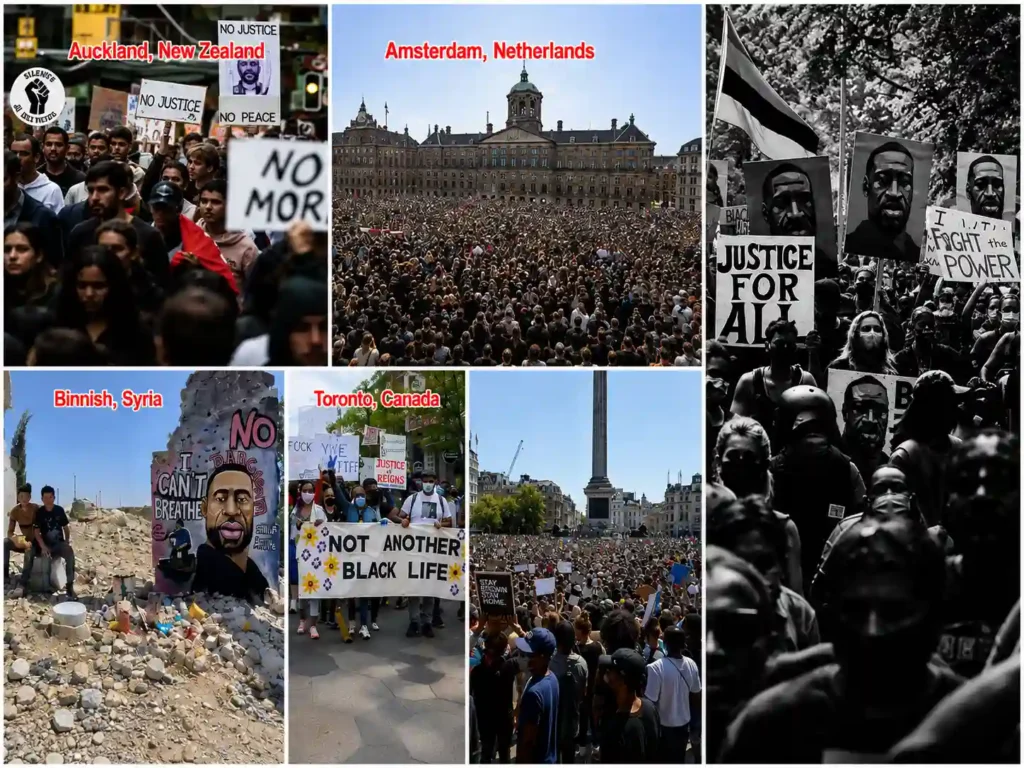
Some cities saw peaceful demonstrations, while others experienced riots, looting, and clashes involving tear gas and rubber bullets, prompting curfews and National Guard deployment in several states. The protests pushed the Black Lives Matter movement to a new level of national prominence and widened the conversation to include housing, education, and healthcare disparities tied to racial injustice.
George Floyd Memorial and Mural
In the years since his death, murals and memorials honoring George Floyd have appeared in Minneapolis and cities around the world, transforming public walls into lasting tributes. The site outside Cup Foods, now known as George Floyd Square, remains a central gathering place and informal memorial maintained by the local community.
These murals often depict Floyd’s face alongside the names of other victims of police violence, symbolizing a broader movement rather than a single case. They serve as both a memorial and a visual reminder of the demand for lasting reform.
George Floyd Statue
A statue honoring George Floyd has also been installed in public spaces, most notably in Brooklyn, New York, as part of efforts to memorialize victims of police violence and racial injustice. Statues like this have occasionally drawn controversy or vandalism, reflecting how divisive the broader conversation around Floyd’s death and its meaning remains.
Despite the controversy some of these tributes have attracted, they continue to stand as physical markers of a moment that reshaped public debate on law enforcement and civil rights in America.
FBI Investigation and Federal Involvement
FBI agents were involved early in the George Floyd case, working alongside the Department of Justice to investigate potential civil rights violations independent of the Minneapolis Police Department’s internal review. This federal investigation ran parallel to the state prosecution and ultimately supported the civil rights charges brought against all four officers.
The involvement of federal investigators underscored how the case moved beyond a local matter, becoming a benchmark for how the federal government responds to allegations of police misconduct nationwide.
Five Years Later: What’s Changed and What Hasn’t
By the fifth anniversary of Floyd’s death in May 2025, the picture on police reform was mixed. Reports noted that around 140 law enforcement oversight bills had been introduced or passed across various states since 2020, alongside federal consent decrees in cities including Minneapolis and Louisville aimed at limiting use of force and improving accountability.
A Pew Research Center study found that 52% of U.S. adults believed increased focus on racial issues had led to meaningful change, though this was down from 72% in the 2020–2021 period immediately following Floyd’s death. Under the Trump administration, some federal consent decrees and police-reform settlements were rolled back, leaving advocates and the Black community divided on how much progress has truly held.
Family attorney Ben Crump has continued to push for closed investigations to be reopened in multiple cities, arguing that meaningful change in policing practices remains incomplete five years on.
Recent Development: NYPD Officer Convicted Under Chokehold Ban Named for Floyd
In August 2026, an NYPD officer, Omar Habib, became the first person convicted under a New York City chokehold law that was strengthened and named in response to Floyd’s killing. The law, passed by the City Council, banned chokeholds that impede breathing or blood circulation during an arrest.
The case stemmed from a 2023 incident in the Bronx involving a man resisting arrest at a Bronx catering hall. Habib was convicted of misdemeanor assault after New York’s highest court upheld the underlying law a year before, following challenges from police unions. Prosecutors said the man briefly lost consciousness during the encounter, though the felony strangulation charge was dismissed, leaving the misdemeanor conviction as the first of its kind tied directly to the chokehold ban.
FAQs
When did George Floyd die, and how?
George Floyd died on May 25, 2020, in Minneapolis after Derek Chauvin knelt on his neck for over nine minutes during an arrest. Two independent autopsies ruled the death a homicide caused by restraint and impeded breathing.
Who was convicted in connection with Floyd’s death?
Derek Chauvin was convicted of second-degree murder, third-degree murder, and second-degree manslaughter, and sentenced to 22½ years. In December 2021, Chauvin, Tou Thao, and J. Alexander Kueng were also found guilty on federal civil rights charges, while Thomas Lane pleaded guilty to failing to provide aid.
What sparked the George Floyd protests?
The protests were sparked by outrage over the bystander video showing Floyd’s arrest and death, which spread rapidly online. It became a flashpoint for long-standing frustration over police brutality and systemic racism, triggering nationwide and global demonstrations.
Where did George Floyd die, and is there a memorial there?
George Floyd died outside Cup Foods in Minneapolis, at the intersection now known as George Floyd Square. The site has since become a community-maintained memorial, and murals honoring him have appeared in cities around the world.
What is “His Name Is George Floyd” about?
It is a 2022 biography by Robert Samuels and Toluse Olorunnipa that traces Floyd’s full life story, from his childhood in Fayetteville to his death in Minneapolis. The book won the 2023 Pulitzer Prize for General Nonfiction.
Has policing changed since George Floyd’s death?
By 2025, roughly 140 state-level police oversight bills had been introduced since 2020, alongside federal consent decrees in some cities. However, some reforms have since been rolled back, and public opinion on whether meaningful change occurred remains divided.
What is the NYPD chokehold case connected to George Floyd?
In August 2026, NYPD officer Omar Habib became the first person convicted under a New York City law banning chokeholds, a law strengthened in response to Floyd’s death. The case involved a 2023 Bronx arrest in which the officer’s chokehold caused the man to briefly lose consciousness.
Read About : hans zimmer