
Jared Isaacman built Harbortouch from a teenage idea into one of America’s fastest-growing payment processing companies. He started at 16 in his parents’ basement in New Jersey, with no college degree and a $10,000 loan. That company later became Shift4 Payments, a billion-dollar fintech. Its success funded fighter jets, private spaceflights, and eventually a path to leading NASA.
Jared Isaacman Biography
| Field | Details |
|---|---|
| Full Name | Jared Todd Isaacman |
| Nickname | Rook |
| Date of Birth | February 11, 1983 |
| Place of Birth | Westfield, New Jersey, U.S. |
| Age | 43 |
| Nationality | American |
| Zodiac Sign | Aquarius |
| Profession/Occupation | Entrepreneur, pilot, commercial astronaut, NASA Administrator |
| Years Active | 1999–present |
| Education | GED; Bachelor’s in Professional Aeronautics, Embry-Riddle Aeronautical University (2011) |
| Genre/Field | Fintech, payment processing, aviation, spaceflight |
| Spouse/Partner | Monica Chacana (m. 2012) |
| Children | Two daughters, Mila and Liv |
| Parents | Douglas Isaacman, Sandra Marie Isaacman |
| Siblings | Youngest of three children |
| Net Worth | Estimated at over $1 billion |
| Notable Works | Founder of United Bank Card/Harbortouch (now Shift4 Payments), co-founder of Draken International, commander of Inspiration4 and Polaris Dawn |
| Awards/Honors | Light-jet round-the-world speed record (2009) |
| Social Media | X: @rookisaacman |
Who Is Jared Isaacman? The Harbortouch Founder Explained
Jared Isaacman is the founder of Harbortouch, the payments platform that grew into Shift4 Payments. He is also an accomplished aviator, a spacewalking astronaut, and the 15th NASA Administrator. Few modern entrepreneurs have moved so smoothly from credit-card terminals to commanding a SpaceX mission.
His story stands out because nothing about it was handed to him. He was a high school dropout who never chased venture capital. Instead, he built a basement credit-card processing business on cold calls, reinvested every dollar, and kept control of the company for two decades.
In my years of studying founder stories, I’ve noticed most billionaires pivot early into one big bet. Isaacman did the opposite. He spent almost twenty years on a single, unglamorous problem: helping small businesses accept card payments cheaply and reliably. The space career came later, funded entirely by that patience.
Early Life and Childhood in New Jersey
Isaacman was born on February 11, 1983, and grew up in Bernards Township, New Jersey. He was the youngest of three children in a middle-income family. His parents, Douglas and Sandra Marie Isaacman, raised him in a home where independence came early.
Space caught his attention as a young child. Around age five, he became fascinated with rockets and astronauts. As a kid, he attended Aviation Challenge camp at the U.S. Space & Rocket Center in Huntsville, Alabama, a childhood dream that would quietly shape his adult life.
At William Annin Middle School and later Ridge High School, he was more interested in computers than classrooms. By his early teens, he was fixing machines, removing viruses, and building websites for neighbors. That hands-on tech repair work became his first real business.
Dropping Out of Ridge High School
Isaacman left Ridge High School at 16, during his early teen years, after deciding formal education wasn’t serving him. He earned a GED instead. For his parents, it was a hard decision to accept, but he already had paying clients and a clear direction.
He wasn’t dropping out to do nothing. He wanted a full-time job and an independent lifestyle. That choice, risky as it looked, gave him the hours and freedom to learn how real businesses ran from the inside.
First Jobs in Computer Repair and IT
At 14, he was running a small computer repair business. Soon after, he worked as an in-house IT consultant and computer repair technician. One of those roles placed him at Merchant Services Inc. (MSI), a company that sold credit-card processing to merchants.
Working on MSI’s network, he saw how card processing actually worked behind the scenes. He noticed something important: merchants were paying too much for slow, confusing service. That observation turned a teenage IT worker into a future payments founder.
How Jared Isaacman Founded United Bank Card
In 1999, at age 16, Isaacman founded United Bank Card in his parents’ basement. It was a payment processing company aimed at small and medium businesses. The idea was simple: offer merchants cheaper, more efficient processing with better customer experience than established players.
He started with almost nothing. Using contacts he had built at MSI, he cold-called merchants and pitched them a better deal. His best friend, Brendan Lauber, joined him early and later became a senior executive in the company.
The early operation was tiny. A handful of phones, a few computers, and a lot of paperwork filled the basement. Isaacman handled sales, support, and setup himself. Within months, he had real clients and recurring revenue, which proved the model could work.
The $10,000 Loan From His Grandfather
United Bank Card was bootstrapped with a $10,000 loan from Isaacman’s grandfather. There was no outside funding and no investor pitch deck. That single check covered the basics needed to start signing merchants and processing transactions.
This detail matters more than it seems. Because he didn’t give away equity early, Isaacman kept full control. Later, when the company was worth billions, that ownership became the foundation of his personal fortune.
The Rise of Harbortouch
United Bank Card grew steadily through the 2000s by focusing on restaurants, retailers, and other small businesses. Its biggest shift came when it launched Harbortouch, a touchscreen point-of-sale system bundled with payment processing. Merchants could now get a full POS setup and card processing from one provider.
In 2012, United Bank Card was rebranded as Harbortouch to reflect this POS-first direction. The company had become one of the fastest-growing providers in the U.S. payments market, serving tens of thousands of merchants and processing billions of dollars in annual bankcard volume.
Harbortouch also landed partnerships that boosted credibility. One notable deal brought its services to thousands of UPS Store locations (formerly Mail Boxes Etc.). For a company born in a basement, winning a national franchise network showed how far it had come.
Harbortouch and Shift4 Growth Timeline
| Year | Milestone |
|---|---|
| 1999 | United Bank Card founded in a New Jersey basement |
| Late 2000s | Harbortouch touchscreen POS system launched |
| 2012 | Rebranded as Harbortouch; acquired Shift4 Corporation |
| 2016 | Searchlight Capital makes a significant investment |
| 2017 | Company unified under the Shift4 Payments name |
| 2020 | IPO on the New York Stock Exchange (NYSE: FOUR) |
| 2022 | Acquired The Giving Block, a crypto fundraising platform |
| 2023 | Completed acquisition of Finaro for cross-border e-commerce |
| 2025 | Isaacman hands the CEO role to Taylor Lauber |
Searchlight Capital Investment in Harbortouch
In 2016, Searchlight Capital made a significant investment in Harbortouch. The deal, supported by debt financing from major banks, gave the company fresh capital to expand its POS-as-a-service model and invest in software and hardware.
Isaacman stayed on as CEO and kept a large ownership stake. The investment didn’t change the company’s identity. It simply fueled the next phase of growth, which included building a more complete end-to-end payments platform.
The Business Model Behind Harbortouch’s Billion-Dollar Growth
Harbortouch’s model was built on recurring transaction fees. Every card swipe at a merchant’s register earned the company a small cut. Multiply that across thousands of businesses, and you get stable, predictable income that grows with each new client.
The company’s smartest move was giving merchants POS systems for a low monthly fee instead of charging large upfront costs. Small businesses loved it because they didn’t need to buy expensive hardware. Harbortouch loved it because those merchants stayed for years.
By controlling more of the payment chain, from the terminal to processing and analytics, Harbortouch boosted retention. When one company handles your POS, payments, and reports, switching providers becomes a hassle. That stickiness is what turned steady revenue into billion-dollar growth.
Key Growth Strategies
Several strategies drove Harbortouch’s expansion:
- Serving underserved small businesses that larger processors often ignored
- Building proprietary technology instead of relying entirely on third parties
- Reinvesting revenue back into the company rather than chasing quick profits
- Bundling POS systems with processing to create multiple revenue streams
- Growing through referrals and repeat business built on strong client relationships
From Harbortouch to Shift4 Payments
In 2012, Harbortouch acquired Shift4 Corporation, a company known for secure payment technology. This gave Harbortouch advanced security tools and access to larger enterprise clients. Over the next few years, the combined business was rebranded as Shift4 Payments.
The rebrand marked a shift from small merchants to a broader market. Shift4 began serving large enterprises in hospitality, including major hotel chains, casinos, and well-known restaurant brands. Its integrated systems connected payments with hundreds of software platforms used by those industries.
Headquartered in the Allentown, Pennsylvania area, Shift4 grew into a company with thousands of employees and offices across several countries. Isaacman led it as CEO throughout this transition, steering the company from a payments vendor into a full commerce technology platform.
Shift4 IPO and International Expansion
Shift4 Payments went public in June 2020 on the New York Stock Exchange under the ticker FOUR. The IPO came during a turbulent market, yet investor demand was strong. It turned Isaacman’s long-held ownership into a publicly valued fortune.
After going public, Shift4 expanded internationally. In 2022, it acquired The Giving Block, a crypto fundraising platform for nonprofits. In 2023, it completed the purchase of Finaro, a cross-border e-commerce provider, strengthening its presence in Europe and global online payments.
How Shift4 Survived COVID-19
When COVID-19 hit in March 2020, Shift4’s core customers, restaurants and hotels, were hit hard. Transaction volume dropped sharply within weeks. For a company preparing to go public, it was a serious threat to survival.
Isaacman responded quickly. Shift4 waived certain fees for struggling merchants and rolled out tools like online ordering, QR code menus, and contactless payments. These moves helped restaurants keep operating and kept Shift4 relevant during the crisis.
Within about three months, volumes began recovering. The company went ahead with its IPO that June. Looking back, the pandemic tested Shift4’s model and proved its customer-first approach could hold up under pressure.
Challenges Jared Isaacman Faced in Payments
Payment processing is heavily regulated. Isaacman had to navigate strict financial regulations, bank partnerships, and compliance rules while still a teenager. Without a lawyer’s background or formal training, he learned these rules on the job.
Competition was another constant hurdle. Established players had bigger budgets, brand recognition, and existing bank relationships. Later, newer fintech companies like Square pushed into the same small-business market with simple card readers and slick marketing.
Scaling also brought its own problems. Growing fast without hurting service quality is difficult in payments, where a single outage can cost merchants real money. Isaacman’s long-term focus on reliability helped the company keep clients through these challenges.
Jared Isaacman Net Worth and Shift4 Stake
Jared Isaacman’s net worth is estimated at over $1 billion. Over the years, estimates have ranged roughly between $1.4 billion and $2.3 billion, largely depending on Shift4’s share price, since most of his wealth came from his stake in the company.
At the time of the IPO, he held a controlling stake in Shift4, estimated at around 38%. That ownership, kept since the basement days, is the main reason a high school dropout became a billionaire businessman.
His other assets add to that total. These include proceeds from his stake in Draken International, a private collection of aircraft including military jets, and other investments. His spending on space missions and charity has also been substantial.
Aviation Career and World Record Flight
Isaacman began flying lessons around age 21, partly to deal with burnout from running the company. He started on small prop planes like the Cessna 172 and moved up through instrument, multi-engine, and commercial ratings over the following years.
In 2009, he set a world record for the fastest flight around the world in a light jet. Flying a Cessna Citation CJ2, he completed the trip in 61 hours and 51 minutes. The previous record was beaten by about 20 hours.
The record flight also raised money for Make-A-Wish. Around the same time, Isaacman joined the Black Diamond Jet Team, flying military jets like the L-39 at more than 100 air shows. Flying became much more than a hobby.
Draken International: A Private Air Force
In 2012, Isaacman co-founded Draken International, a Florida-based company with a privately owned fleet of fighter jets. Draken provides commercial adversary services, which means its pilots fly as “enemy” aircraft to train U.S. military pilots.
The fleet grew to close to 100 jets, including A-4 Skyhawks and Soviet-era MiGs. Draken became one of the largest private fighter-jet operators in the world, earning the nickname “private air force provider” in industry circles.
Isaacman ran Draken alongside Shift4, spending only a small portion of his time on it. In 2019, he sold a majority stake in Draken to Blackstone, adding a significant sum to his fortune while stepping back from daily operations.
Inspiration4 and Polaris Dawn Space Missions
In September 2021, Isaacman commanded Inspiration4, the first all-civilian orbital spaceflight. He bought the entire SpaceX flight and filled the crew with contest winners and a St. Jude ambassador. The mission spent three days in orbit aboard Crew Dragon.
Inspiration4 was also a fundraiser for St. Jude Children’s Research Hospital. Isaacman pledged $100 million himself, and the campaign raised more than $243 million. A Super Bowl LV ad promoted the mission, and Netflix documented it in the series Countdown.
In September 2024, he commanded Polaris Dawn, the first of three planned Polaris missions with SpaceX. During this five-day mission, he performed the first private spacewalk in a new SpaceX suit. The crew, including Kidd Poteet, Sarah Gillis, and Anna Menon, flew farther than any humans since Apollo.
From Private Astronaut to NASA Administrator
In December 2024, President-elect Trump nominated Isaacman as NASA Administrator. His nomination drew attention because he wanted to overhaul costly programs and lean more on commercial providers like SpaceX for faster, cheaper progress.
The process wasn’t smooth. Trump withdrew the nomination in mid-2025, leaving NASA under acting leadership. Months later, he renominated Isaacman, and the Senate confirmed him in December 2025. He became NASA’s 15th Administrator, succeeding Bill Nelson’s era.
Before entering government, Isaacman stepped down as Shift4’s CEO, handing the role to Taylor Lauber. As Administrator, he has pushed a culture reset at NASA, focusing on reducing contractor dependence and speeding up human exploration goals.
Personal Life: Wife and Daughters
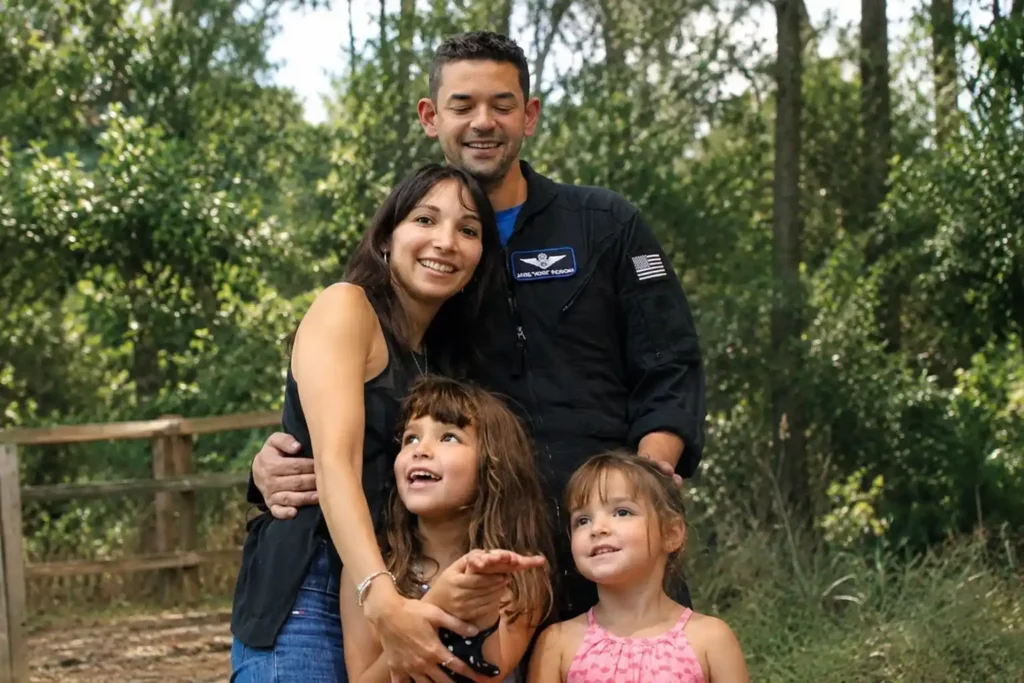
Jared Isaacman is married to Monica Chacana. They met in their teens, when he was still building his first business. The couple married in 2012 and have two daughters, Mila and Liv.
Despite his public profile, Isaacman keeps his family life mostly private. He has spoken about wanting his daughters to grow up seeing that ambitious goals, whether in business or space, are possible with preparation and persistence.
Jared Isaacman’s Approach to Fear and Risk
Isaacman is often called an adrenaline junkie. He flies MiGs, climbs mountains, and has summited Mt. Vinson in Antarctica. Yet he describes himself as someone who avoids unnecessary risks rather than chasing them.
His key to success is handling fear through preparation. He believes in compartmentalizing fear and acting tactically. When you’ve trained hard enough, your skill set takes over in stressful moments, whether in a jet at 500 feet or in a spacesuit outside Dragon.
This mindset carried over from business. Building Harbortouch meant 80+ hour weeks and constant pressure. Isaacman treated each challenge like a flight plan: understand it, prepare for it, then execute calmly.
Lessons Entrepreneurs Can Take From the Harbortouch Story
From my experience covering founder journeys, the Harbortouch story offers some of the most practical lessons for young entrepreneurs:
- Start small, but think big. A basement and a small loan were enough to begin.
- Solve real customer needs. Merchants wanted cheaper, simpler processing, and Isaacman delivered it.
- Build steady revenue. Recurring fees created stability that fueled long-term growth.
- Keep control when you can. Avoiding early venture capital protected his ownership.
- Stay persistent. Two decades on one business turned a startup into a billion-dollar company.
The broader takeaway is that a college degree isn’t the only path. Isaacman’s success came from curiosity, hard work, and a willingness to learn on the job. That combination still works for anyone building something from scratch.
Frequently Asked Questions
How old was Jared Isaacman when he started Harbortouch?
Jared Isaacman was 16 when he founded United Bank Card in 1999, the company that later became Harbortouch. He ran it from his parents’ basement in New Jersey after dropping out of high school.
Is Harbortouch still in business?
Harbortouch no longer operates under its original brand. It became part of Shift4 Payments, which still offers POS systems and payment processing to restaurants, retailers, and hospitality businesses worldwide.
Does Jared Isaacman have a college degree?
Yes. Although he left high school and earned a GED, he later completed a bachelor’s degree in professional aeronautics from Embry-Riddle Aeronautical University in 2011.
Who is the current CEO of Shift4 Payments?
Taylor Lauber became CEO of Shift4 Payments in 2025, taking over from Jared Isaacman. Isaacman stepped away from the role before becoming NASA Administrator.
How much did Jared Isaacman pay for his space missions?
The exact costs were never fully disclosed. Isaacman privately funded both Inspiration4 and Polaris Dawn with SpaceX, and industry estimates suggest each mission cost well over $100 million.
Is Jared Isaacman a billionaire?
Yes. Most of his wealth comes from founding and owning a large stake in Shift4 Payments, with additional gains from selling his majority stake in Draken International.
Read About : tom wilkinson