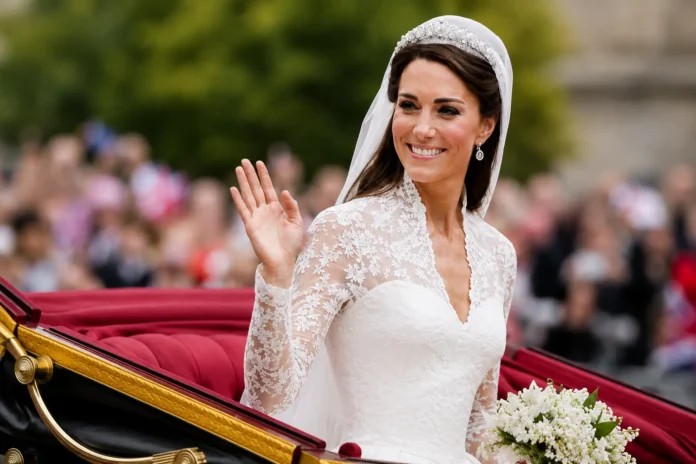
Few wedding gowns have captured global attention quite like the Kate Middleton wedding dress. When Catherine Middleton married Prince William at Westminster Abbey on April 29, 2011, millions watched as she stepped from her car wearing a gown that instantly became one of the most celebrated bridal designs in modern history.
Created by Sarah Burton for Alexander McQueen, the dress blended royal tradition with contemporary elegance. More than a decade later, it remains a reference point for brides, designers, and fashion historians. Its intricate craftsmanship, symbolic details, and timeless silhouette helped redefine bridal trends around the world and cemented its place among the most iconic royal wedding dresses ever created.
The Story Behind the Dress
Why Kate Chose Sarah Burton and Alexander McQueen
Before the wedding, speculation about the designer dominated headlines. The mystery remained intact until Catherine arrived at Westminster Abbey and the palace confirmed that Sarah Burton, then creative director of Alexander McQueen, had designed the gown.
According to official royal statements, Catherine selected the British fashion house because of its exceptional craftsmanship and respect for traditional tailoring. She wanted a dress that balanced tradition and modernity while reflecting the artistic vision associated with Alexander McQueen. The result was a collaboration that perfectly captured both royal heritage and contemporary fashion.
The Inspiration Behind the Design
The gown drew inspiration from classic royal and aristocratic wedding styles while maintaining a distinctly modern feel. Fashion experts frequently compare elements of the design to the elegance of Grace Kelly, whose 1956 wedding dress remains one of the most admired bridal gowns in history.
Rather than embracing dramatic volume or excessive ornamentation, the design focused on clean lines, precise tailoring, and delicate lacework. This understated sophistication helped distinguish the gown from many high-profile celebrity wedding dresses and contributed to its enduring appeal.
Extreme Secrecy Before the Wedding
The creation of the dress was surrounded by extraordinary confidentiality. Only a small group of trusted artisans and designers knew the details before the ceremony. Reports indicate that workspaces were carefully controlled and access was restricted to protect one of fashion’s most closely guarded secrets.
Even family members and industry insiders were kept in the dark. The secrecy helped preserve one of the most memorable moments of the royal wedding, allowing the world to experience the reveal simultaneously.
Design Details That Made the Gown Iconic
The Lace Bodice and Long Sleeves
One of the most recognizable features of the dress was its lace appliqué bodice with elegant long sleeves. At a time when strapless gowns dominated bridal fashion, Catherine’s choice brought sleeves back into the spotlight.
The fitted bodice featured a subtle V-neckline and Victorian-inspired structure that highlighted traditional craftsmanship. The sleeves offered sophistication and modesty while maintaining a modern silhouette suitable for a royal wedding.
Symbolic Floral Motifs
The lace design carried deep symbolism. Handcrafted floral motifs represented the four nations of the United Kingdom:
- Rose for England
- Thistle for Scotland
- Daffodil for Wales
- Shamrock for Northern Ireland
These elements were incorporated into the lacework and veil, adding national significance to the gown while showcasing extraordinary artisan skill.
The Train and Elegant Silhouette
The dress featured a train measuring nearly nine feet in length. Unlike the dramatic trains seen in some royal weddings, Catherine’s was designed to feel graceful and manageable while still creating a grand ceremonial effect.
Sarah Burton designed the skirt to resemble an opening flower, using carefully structured pleats and satin gazar fabric. This combination created movement and elegance without overwhelming the overall look.
Craftsmanship and Materials
The Work of the Royal School of Needlework
The intricate lacework was created with assistance from the Royal School of Needlework, one of Britain’s most respected embroidery institutions. Artisans employed traditional techniques, including the historic Carrickmacross lace-making method.
Attention to detail was remarkable. Team members reportedly washed their hands frequently and replaced needles regularly to ensure the lace remained pristine throughout the construction process.
Luxury Fabrics and Tailoring
The gown combined satin, lace, and carefully structured fabrics that delivered both comfort and elegance. The fitted waist, sculpted silhouette, and delicate detailing demonstrated the technical expertise for which Alexander McQueen is known.
The back of the dress featured dozens of covered buttons, creating a refined finish that reinforced the gown’s classic aesthetic. Every element reflected a commitment to quality and timeless design rather than temporary trends.
The Veil and Tiara
Complementing the gown was a soft ivory silk tulle veil embroidered with the same floral symbols found throughout the dress. Catherine paired it with the Cartier Halo Tiara, loaned by Queen Elizabeth II.
The tiara, featuring hundreds of diamonds, added royal grandeur while allowing the dress itself to remain the focal point. Together, the accessories created a balanced and elegant bridal look that remains instantly recognizable today.
The Global Impact on Bridal Fashion
How the Dress Changed Wedding Trends
The influence of Catherine’s gown was immediate. Bridal designers around the world began introducing long sleeves, lace bodices, and modest necklines into their collections. Brides who had previously favored strapless silhouettes suddenly embraced more traditional designs.
Many industry observers credit the gown with reviving interest in classic bridal elegance. Rather than encouraging extravagance, it promoted timeless beauty, impeccable tailoring, and meaningful details.
Why It Remains Relevant Today
More than fifteen years after the wedding, the dress continues to inspire bridal fashion. Designers regularly reference its silhouette, lace sleeves, and balanced proportions when creating modern wedding collections.
Its enduring popularity stems from its ability to transcend trends. Unlike gowns strongly tied to a specific era, Catherine’s dress still feels contemporary, making it a frequent source of inspiration for brides seeking classic sophistication.
Display at Buckingham Palace
Following the royal wedding, the gown was exhibited at Buckingham Palace, allowing the public to appreciate its craftsmanship up close. The display attracted significant interest and further reinforced the dress’s cultural significance.
Seeing the gown in person revealed details that television broadcasts could not fully capture, including the complexity of the lacework and the precision of its construction.
Frequently Asked Questions
Q: Who designed Kate Middleton’s wedding dress?
A: The dress was designed by Sarah Burton for Alexander McQueen. Catherine worked closely with Burton to create a gown that combined royal tradition with modern elegance.
Q: What made the dress unique?
A: Its combination of handcrafted lace, symbolic floral motifs, long sleeves, a fitted bodice, and a nearly nine-foot train created a look that was both timeless and distinctly royal.
Q: What flowers were represented in the lace?
A: The lace incorporated the rose, thistle, daffodil, and shamrock, symbolizing England, Scotland, Wales, and Northern Ireland respectively.
Q: Did the dress influence bridal fashion?
A: Yes. Many designers and fashion commentators credit the gown with reviving interest in lace sleeves, classic silhouettes, and more traditional bridal styling.
Q: What tiara did Kate wear?
A: Catherine wore the Cartier Halo Tiara, which was loaned to her by Queen Elizabeth II for the wedding ceremony.
Conclusion
The Kate Middleton wedding dress remains one of the defining fashion moments of the 21st century. Designed by Sarah Burton for Alexander McQueen, it successfully blended royal tradition, British craftsmanship, and contemporary elegance into a gown that continues to inspire brides around the world.
From its symbolic lace motifs and exquisite tailoring to its influence on bridal trends, the dress achieved something few wedding gowns ever accomplish: lasting cultural significance. More than a beautiful outfit, it became a symbol of a new chapter in royal history and a benchmark for timeless bridal style that still resonates with fashion lovers today.
Read About aubrey plaza bikini